
Grip Strength and Longevity: What Your Grip Says About Heart Health and Ageing
The short answer: How hard you can squeeze predicts how long you are likely to live — in one study of nearly 140,000 adults, better than blood pressure did. Grip is not magic. It is a quick read on how much muscle you have kept.
- Every 5 kg of grip lost was linked with a 16% higher risk of death from any cause.
- It beat systolic blood pressure as a predictor of cardiovascular death in that study.
- Grip is a proxy, not a cause — squeezing a ball will not fix it. Whole-body strength work will.
- Power may matter more than raw strength once you are past fifty.
It sounds odd that a handshake tells you anything. But grip is cheap to measure, hard to fake, and it tracks total body strength closely enough to be useful — which is why it keeps turning up in ageing research.
What does the evidence actually show?
The PURE study followed 139,691 adults across 17 countries and published in The Lancet in 2015. Every 5 kg reduction in grip strength was associated with a 16% higher risk of death from any cause and a 17% higher risk of cardiovascular death.
Notably, grip predicted cardiovascular death better than systolic blood pressure did. That finding is what moved grip from a curiosity to something clinicians pay attention to.
Why would a handshake predict heart disease?
Because it is standing in for something bigger. Grip correlates with total muscle mass, with how physically active you have been, and with the general resilience that lets someone recover from illness or surgery.
The important distinction: grip is a marker, not a mechanism. Training your hands with a squeeze ball will move your grip score and change nothing else. What moves the underlying picture is loading your whole body — legs, back, shoulders — regularly enough to keep muscle.
Is grip still considered a good marker in 2026?
Mostly, with an honest caveat. A 2025 expert consensus included grip in a 14-marker panel of functional ageing biomarkers, and a 2026 validation study in a large German cohort supported its use.
But a 2025 Mayo Clinic Proceedings analysis of 3,889 adults aged 46 to 75 found that when muscle power was measured properly, grip lost its statistical significance. Power — how fast you can produce force — was the stronger predictor.
How we read that: grip is a good screening number because it is quick and cheap. It is not the whole story. If grip looks low, the useful next question is what your legs and your power output are doing.
What moves it?
Progressive resistance training, two or three times a week, loading the major patterns — push, pull, squat, hinge, carry. Loaded carries in particular tend to shift grip while training everything else at the same time.
Protein matters too, especially over fifty, where most people undershoot. And the biggest single factor is simply not stopping: muscle responds to load at any age, but it is far easier to keep than to rebuild.
Should I get measured?
If you are curious, a grip test takes moments and gives you a baseline to compare against later. It is more useful as a trend over years than as a one-off score.
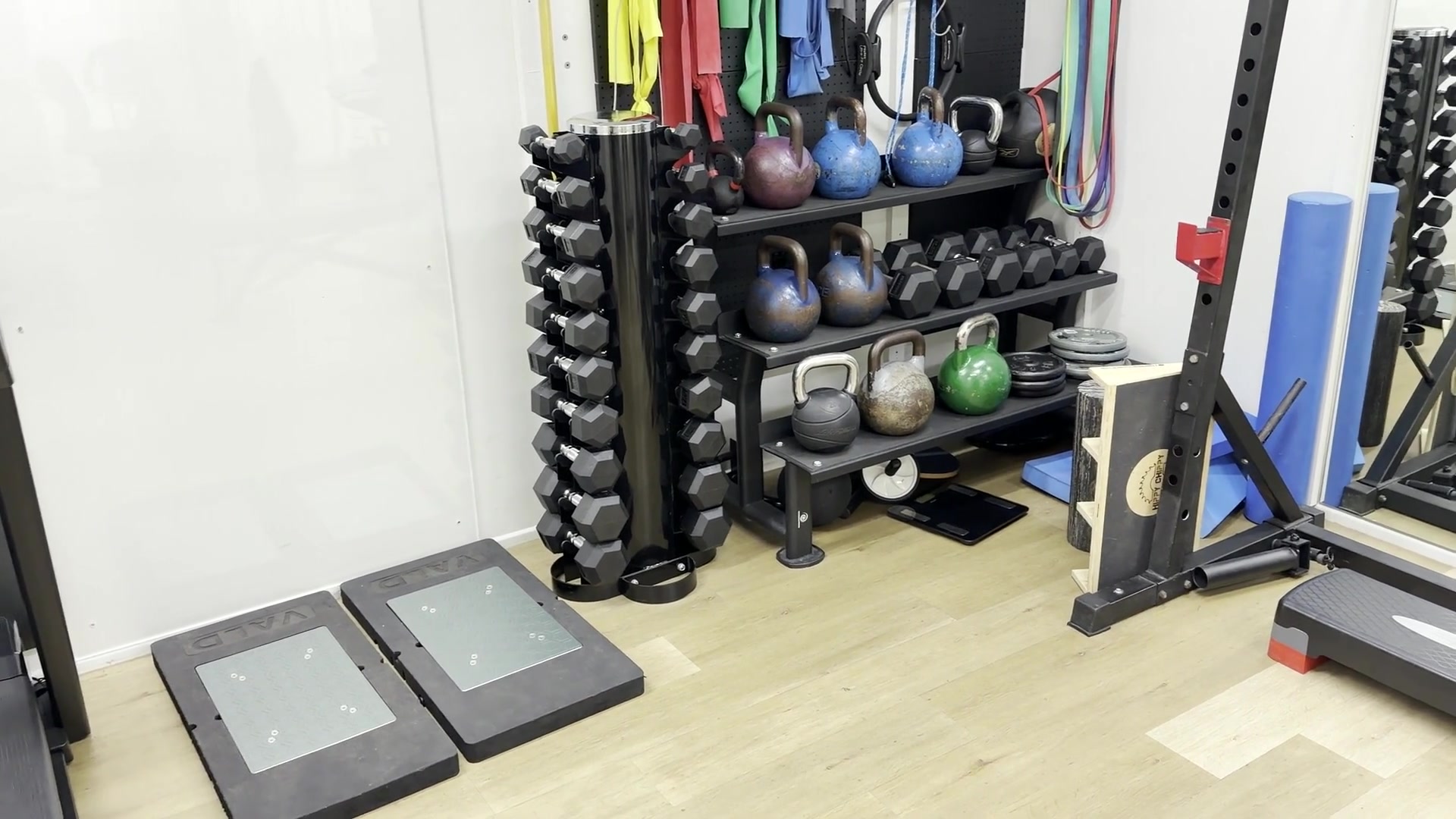
Where it changes what we recommend, we can also measure power and left-right asymmetry objectively on our force plates — differences that are genuinely hard to judge by eye. That is a tool we use when it will change the plan, not something everyone needs. There is more on our assessments page.
Where to start
If you want to build the strength side properly, our gym-based rehab space exists for exactly this, and grip is one of five numbers worth knowing about how you are ageing.
Daisy Hill Physio is at U4 11–13 Allamanda Dr, Daisy Hill QLD 4127, in Logan, Queensland — south of Brisbane, not Logan in Utah — and we have been here since 1987. Book an appointment online or call 07 3209 2000 and tell reception what you are trying to get back to doing.
This is general information about a research marker, not a diagnosis or a health prediction for any individual. A low grip score on its own does not mean anything is wrong.
Reviewed by Teya Williams, Physiotherapist at Daisy Hill Physio — Healthy Ageing and Strength for Life. Reviewed 14 August 2026.
Sources: Leong et al., The Lancet 2015 — PURE study, 139,691 adults across 17 countries. Expert Delphi consensus on functional ageing biomarkers, 2025, and validation in Biomarker Research 2026 using the Berlin Aging Study II cohort. Mayo Clinic Proceedings 2025, CLINIMEX cohort, 3,889 adults aged 46–75.