
Hydrotherapy in Logan and Brisbane South: What One-on-One Warm-Water Physio Involves (and Why We Don’t Run Classes)
The short answer: One-on-one hydrotherapy is a physiotherapy session that happens in a heated pool instead of on the clinic floor. Your physiotherapist is in the water with you, working only on your program. At Daisy Hill Physio we run it 1:1 at Logan North Aquatic Centre in Underwood, serving Logan and Brisbane south, and we do not run group hydrotherapy classes.
- Warm water takes load off painful joints, so you can move and strengthen earlier than you could on land.
- Ours is one physiotherapist, one patient, in the water together. A class cannot progress your program rep by rep, and it cannot check your knee in the same breath.
- A 2026 review of 26 trials found aquatic exercise performed best among single treatments for chronic back pain, though the evidence is low certainty.
- Medicare care plans, DVA, plan- or self-managed NDIS, WorkCover, CTP and private extras can all fund it. Reception checks your pathway before you book.
“I want to get moving again, but every time I try, my knee blows up for three days.” That is the most common reason someone in Logan ends up asking us about hydrotherapy. This is what a one-on-one session involves, who it suits, and why we deliberately do not run classes.
What happens in a one-on-one hydrotherapy session?
It starts on land. Your first appointment is a standard physiotherapy assessment at our Daisy Hill clinic, because we need to know what is driving your pain before we put you in a pool. That is also where we screen for anything that makes water work unsafe for you.
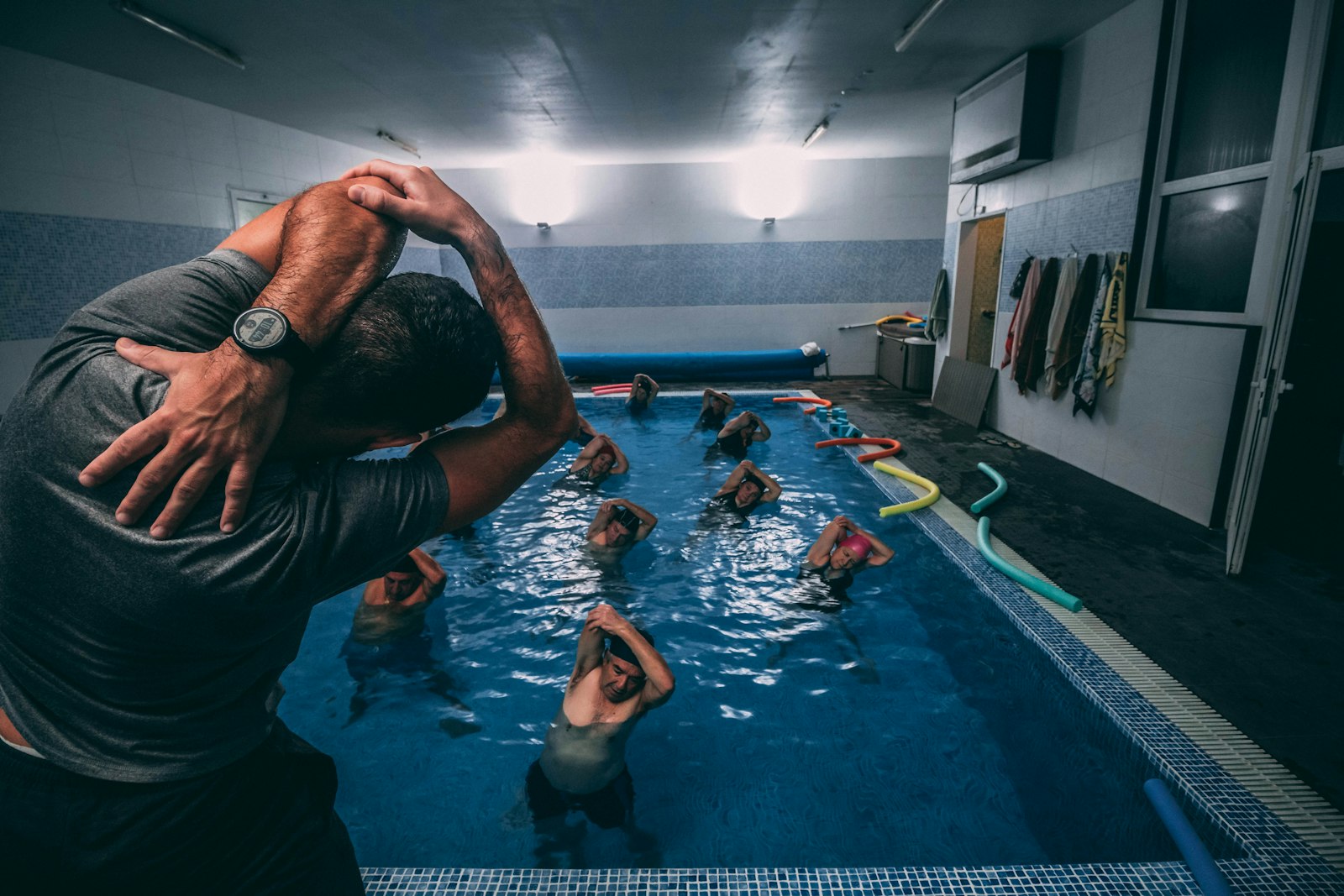
Pool sessions then run at Logan North Aquatic Centre, 2 Sports Drive, Underwood, a short drive from the clinic. Each session follows a structure: a warm-up, mobility work, strength and balance, then graded conditioning. Your physiotherapist is in the water beside you the whole time.
You do not need to be a swimmer. The work happens standing in a heated program pool, and the depth is chosen for how much of your body weight we want the water to carry.
Why one-on-one and not a class?
Because rehab is dosing. The point of a hydrotherapy program is to find the amount of load your joint tolerates today, push it a little, and check how you responded next session. A class runs the same routine for everyone in the pool. It cannot see that your hip abductors gave out on rep eight.
One-on-one also means the plan changes the day it needs to. If your knee is cranky, we drop the depth and slow the tempo. If it is good, we add resistance.
Group aqua classes at a council pool are a good thing for general fitness once you are well. They are not a substitute for a supervised rehab program, and most of the people we see in the pool are there precisely because a class or a gym flared them up.
Who is hydrotherapy for, and who is it not for?
It suits people whose problem is load: osteoarthritis of the knees, hips or spine, the early weeks after a joint replacement, chronic low back pain where standing and walking hurt, fibromyalgia and persistent pain, and late pregnancy. It is also a gentle way for older adults to rebuild strength and balance without impact.
It is not for everyone. Open wounds, an active infection, uncontrolled epilepsy, unstable heart or lung conditions and some bladder or bowel problems mean we keep you on land. That is what the screening call and the first assessment are for.
And water is a stage, not a destination. If you can already train on land without a flare, you probably do not need the pool; our gym-based rehab will get you stronger faster.
Does the evidence support warm-water rehab?
For chronic low back pain, a 2026 network meta-analysis in Frontiers in Medicine pooled 26 randomised trials. Among single treatments, aquatic exercise performed best for pain, and it beat land-based exercise for disability. The authors are blunt that certainty is low and the trials vary a lot, so this is directional evidence, not a guarantee.
After knee replacement, a 2026 meta-analysis of six trials (704 patients) in Healthcare found hydrotherapy relieved pain about as well as land rehab, not better, but produced larger gains in knee extensor and hip abductor strength. That matches what we see: water is not magic for pain, but it lets people load muscle they otherwise could not.
The honest summary is that water works best for the people who cannot yet tolerate land. That is exactly who we put in the pool.
Is there one-on-one hydrotherapy on the Brisbane south side?
Yes. Logan North Aquatic Centre is a few minutes from the Pacific Motorway at Underwood, which makes it as practical for Brisbane’s southern suburbs as for Logan: Rochedale, Rochedale South, Eight Mile Plains, Kuraby and Runcorn, as well as Springwood, Shailer Park, Slacks Creek and Daisy Hill.
Most hydrotherapy in the area is run as a class, or by a private pool operator. Ours is a physiotherapist in a public pool with you, funded the same way as any physio appointment, with the clinic gym waiting for when you are ready to leave the water.
How is hydrotherapy funded in Queensland?
It is physiotherapy, so it funds like physiotherapy. With a GP chronic condition management plan, Medicare item 10960 rebates $63.40 per visit, up to five allied-health visits per calendar year, pooled across all allied health. Details are on our Medicare physiotherapy page.
Veterans with a Gold Card, or a White Card for an accepted condition, need a GP referral; a DVA treatment cycle covers up to 12 sessions or one year, whichever ends first. See our DVA physiotherapy page. NDIS participants who are plan-managed or self-managed can use their capacity-building budget; WorkCover, CTP and private extras also apply.
What do I bring, and what are the rules?
Swimmers, a towel, a water bottle and something warm for afterwards.
Pool time is limited, so we ask for 24 hours’ notice if you cannot make it; late cancellations can attract a fee. The full list is on our hydrotherapy policies page.
How do you get from the pool back onto land?
Every pool program has an exit plan. As your joint settles and your strength comes up, we shift work to the clinic gym. Where it changes what we recommend, our VALD force plates let us measure left-right strength differences objectively rather than guessing.
The goal is never to keep you in the pool. It is to get you back to the walk, the grandchildren or the gym you were missing.
Ready to talk? Book a land-based assessment online at bookings.nookal.com/bookings/location/GDHFM, or call 07 3209 2000 and tell reception you are interested in hydrotherapy; they will check your funding pathway first. You can also request a call back. Daisy Hill Physio is at U4 11–13 Allamanda Dr, Daisy Hill QLD 4127 (info@daisyhillphysio.com.au), serving Logan and Brisbane south. Read more on our hydrotherapy page. That is Logan City, Queensland, Australia, not Logan, Utah.
This article is general information, not a diagnosis. Seek urgent care for chest pain, sudden weakness, fever with joint swelling, or a wound that is red, hot or leaking, and tell us before any pool session if your health has changed.
Reviewed by Ben Birchall, physiotherapist and lead of the hydrotherapy program at Daisy Hill Physio.
Sources: Petersen C et al. In water or on land? A network meta-analysis of aquatic and land-based exercise interventions for pain and disability in chronic lower back pain. Frontiers in Medicine 2026;13:1739263 (26 RCTs, search to May 2025). · Emam MA et al. The role of hydrotherapy in enhancing recovery after knee arthroplasty: a systematic review and meta-analysis of randomized controlled trials. Healthcare 2026;14(13):2005 (6 RCTs, n=704, search to 30 Nov 2025). · MBS Online, item 10960 (fee $74.55, benefit $63.40), accessed 11 Sep 2026. · Department of Veterans’ Affairs, Physiotherapists provider page (referral and treatment cycle), accessed 11 Sep 2026.